Which Salt Is the Best Option for Commercial Water Softeners?
If you manage a facility that depends on water softening, whether it’s a hospital, hotel, food processing plant, or manufacturing facility, you’ve likely had to source salt for your system. But have you ever stopped to think about which salt you’re actually putting into your equipment?
Not all salt is the same, and using the wrong kind can cost you down the road. From system efficiency and equipment lifespan to long-term maintenance expenses, the type of salt you choose has ripple effects.
Let’s explore the most common salt options for commercial water softeners, break down their pros and cons, and help you decide which is the most efficient and cost-effective solution for your operation.
The Most Common Industrial Water Softener Salt Types
Before we get into recommendations, let’s look at the options typically used in commercial water softeners. While all soften water, they each work differently based on how they’re processed and the purity levels they offer.
Rock Salt: The Budget Option with Hidden Costs
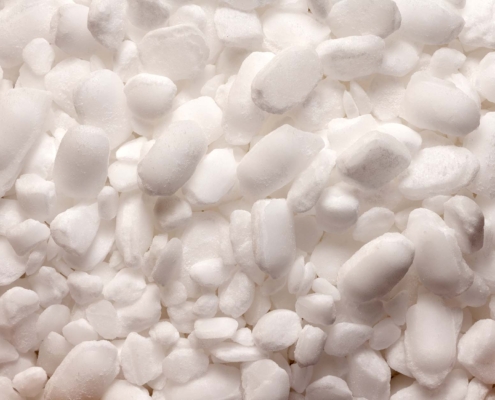
Rock salt is mined straight from the ground and minimally processed. It’s often the cheapest option available and might seem appealing from a cost standpoint. However, rock salt contains higher levels of insoluble minerals, which settle in your brine tank over time. This buildup creates sludge that requires more frequent cleanouts and can clog your system.
Pros:
- Very inexpensive upfront
- Readily available
Cons:
- Leaves residue and buildup
- Leads to frequent brine tank cleanouts
- Shortens equipment lifespan over time
Solar Softener Salt: The High-Purity, High-Performance Choice
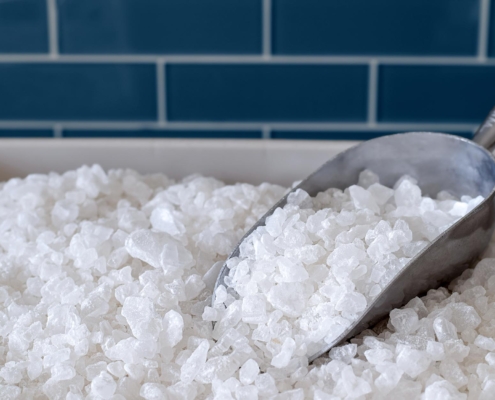
Solar salt is created by evaporating seawater using sunlight. It’s naturally formed, environmentally friendly, and, most importantly for commercial operations, extremely pure. At 99.8–99.9% sodium chloride, solar salt offers a clean burn with almost no residue. This purity means less sludge, better brine quality, and a healthier brine tank and softener system. It’s an excellent choice for high-capacity systems that need long-term reliability.
Pros:
- 99.9% purity
- Low maintenance requirements
- Cleaner brine tank and system
- Ideal for automated or high-use facilities
Cons:
- Slightly more expensive than rock salt
Evaporated Salt: The Most Refined (and Expensive)
Evaporated salt is produced through a high-energy process that removes nearly all impurities. While it boasts the highest purity level, it’s also the most expensive salt option on the market. Because of its cost, evaporated salt is usually reserved for specialty or laboratory-grade applications that require ultra-pure softening, far beyond what most commercial operations need.
Pros:
- Nearly 100% purity
- Zero insolubles
- No residue buildup
Cons:
- Significantly more expensive
- Overkill for most standard systems
Pellet Salt: Compressed Purity with a Catch
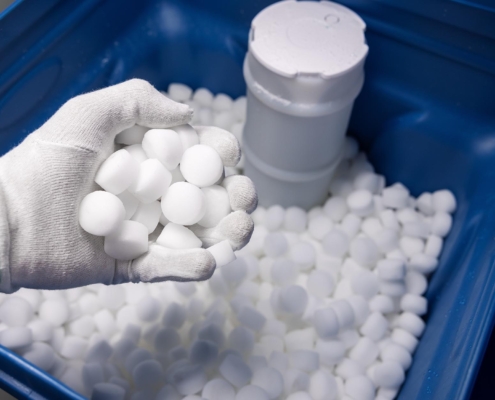
Pellet salt is made by compressing refined salt into uniform, hard pellets. It’s often marketed for residential use but is sometimes used in smaller commercial systems. One thing to note: pellet salt contains a binding agent to help it keep its shape. Over time, that gumming agent can lead to buildup or clumping in the brine tank. While cleaner than rock salt, it doesn’t outperform solar salt in larger commercial applications.
Pros:
- Relatively clean
- Easy to handle and pour
- Good for smaller systems
Cons:
- Contains bonding agents
- May lead to sludge over time
- Less effective for high-volume usage
Why Solar Salt Is Ideal for Commercial Water Softeners
For most commercial operations, solar salt strikes the best balance between performance, cleanliness, and long-term value. Facilities using solar salt often notice better water clarity, smoother equipment performance, and less frequent maintenance.
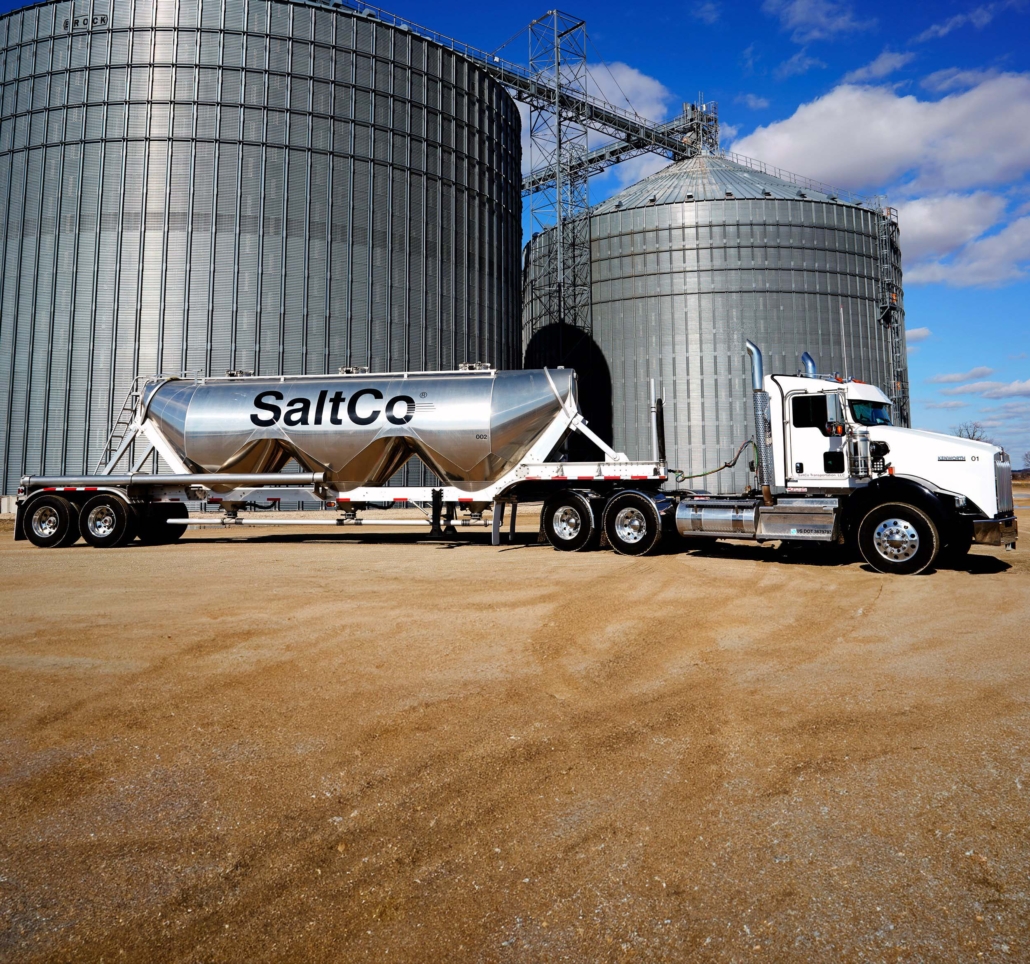
It’s clean, easy on equipment, and works seamlessly with Jet Powered Salt Delivery systems like SaltCo’s, which deliver high-purity salt directly to your brine tank without dust or waste.
Clean Burn, Clean Brine Tank
Because of its high purity, solar salt doesn’t leave behind the same sediment or sludge that rock or pellet salts do. That means your maintenance teams won’t need to clean out the brine tank as often, and your system won’t have to work as hard.
Fewer System Repairs
Using lower-quality salt leads to buildup, which can affect the float valve, injectors, and other parts of the softening system. Facilities using solar salt typically see fewer clogs, better system pressure, and fewer service calls overall.
Long-Term Cost Efficiency
Even though it costs more per pound than rock salt, solar salt pays off. Reduced downtime, lower maintenance costs, and increased system lifespan often outweigh the initial investment. This makes solar salt the more economical option when you consider the total cost of ownership.
How Salt Type Affects Equipment Performance and Longevity
Your water softener is only as good as what you put in it. That’s why the type of salt you use has a direct impact on how long your equipment lasts, and how well it performs. Over time, lower-grade salts can leave black sludge or mineral crusts in your brine tank, which leads to extra work for your maintenance staff. It can also reduce system efficiency by blocking the flow of brine or interfering with the regeneration process.
If your system is regenerating inefficiently or you’re seeing performance dips, your salt might be the issue. Many of these problems can be avoided entirely by switching to solar salt.
Can You Use Bulk Salt with Any Softener System?
Technically, you can use any type of salt with most commercial water softener systems. But that doesn’t mean you should. While many systems are compatible with various salt types, what matters more is how well the salt maintains long-term system performance. Solar salt is often the best choice for facilities using automated or high-capacity systems, especially when paired with Jet Powered Salt Delivery. However, bulk salt delivery is also a popular method for larger scale industrial facilities.
SaltCo’s delivery system is built around solar salt. It’s designed to deliver clean, pure salt directly to your tank from outside the building, with no mess and no manual hauling. That ensures consistent brine quality and eliminates the operational issues caused by lower-grade salt.
Our team at SaltCo will help you transition to cleaner, more efficient commercial water softening with solar salt delivered directly to your facility. Discover more about our Jet Powered Salt Delivery systems today.
How Solar Salt Works with Jet Powered Salt Delivery
Jet Powered Salt Delivery is all about efficiency, cleanliness, and zero disruption. With SaltCo’s system, we deliver 99.8% pure solar salt through an exterior wall, directly into your brine tank. Here’s why solar salt is the perfect match for this method:
- It flows evenly and reliably through our closed-loop piping.
- It dissolves quickly and completely, optimizing softener regeneration.
- It leaves no sludge or dust in the mechanical room.
Choosing the Right Salt Based on Your Operation
Every facility is different. The right salt for you depends on a few important factors.
- Usage Volume: If you’re using salt at scale, purity becomes critical. Any impurities multiply across high-volume use and create faster wear and tear. Solar salt is ideal for larger operations.
- Water Quality Requirements: If your operation has strict water standards, like food processing or healthcare, then cleaner, purer salt is a must. Solar or evaporated salt will serve you better than rock salt.
- System Design: Some older systems may tolerate lower-quality salts, but modern systems (especially those using automated delivery) benefit from the consistency of solar salt.
- Cost Considerations: Solar salt offers a better long-term return on investment compared to rock or pellet salt. While your cost per pound may be higher, your cost per usable gallon of softened water is often lower over time.
Invest in the Right Salt for the Right Results By Partnering With SaltCo
Choosing a high-purity water softener salt option like solar salt helps you protect your equipment, reduce maintenance, and ensure consistent water quality, especially when paired with an automated delivery solution like SaltCo’s Jet Powered Salt Delivery. Stop settling for short-term savings that cost you more in the long run. Make the switch to a better salt strategy today.