
Solar Salt: Your Complete Guide
Salt is a necessity in our daily lives, but did you know there’s a specific type called solar salt that plays an essential role beyond seasoning our food? From industrial uses to everyday household applications, solar material is a powerhouse. This blog will explore what solar salt is, how it’s mined, and how it works, with a particular emphasis on its role in water softening with high-purity salt.
What is Solar Salt?
This salt is a material harvested by evaporating seawater or brine through the power of the sun. It's one of the purest forms of salt available and is typically composed of about 99.6% sodium chloride (NaCl).
This purity makes solar material a prime choice for various applications, especially where impurities could interfere with performance—such as water softening systems and food production. While this salt can be used in food, its high-purity version is especially valued in water-softening systems and certain industrial processes.
How is Solar Salt Mined?
This salt is "mined" using a process different from traditional underground salt mining. Instead, it relies on the sun and wind to evaporate water from salt ponds, leaving behind the salt crystals that are then harvested.
Steps of the Mining Process
- Brine or Seawater Collection: Seawater or naturally occurring brine is funneled into shallow ponds, typically located in hot, sunny regions.
- Natural Evaporation: The sun heats the water in these ponds, causing it to evaporate. As the water evaporates, the salt concentration in the remaining brine increases.
- Crystallization: When the brine reaches saturation, salt crystals begin to form and sink to the bottom of the ponds. Over time, the concentration of salt increases until only salt crystals remain.
- Harvesting: The salt crystals are collected, cleaned, and processed to remove any remaining impurities. Depending on its intended use, the salt may be further refined to increase its purity.
How Does Solar Salt Work?
In many applications, including water softening, solar material works by dissolving into a brine solution and exchanging ions that interfere with the efficiency of other processes.
In water softening, for instance, this salt dissolves in the brine tank of a water softener system. As hard water passes through the system, calcium and magnesium ions, which cause water hardness, are exchanged for sodium ions from the brine. This ion exchange process effectively "softens" the water, making it more suitable for use and protecting plumbing systems from the harmful effects of hard water buildup.
Analyzing the Different Types of Solar Salt
Solar salt isn’t one-size-fits-all. There are several types of this salt, each serving specific needs depending on its application:
Crystalline Salt
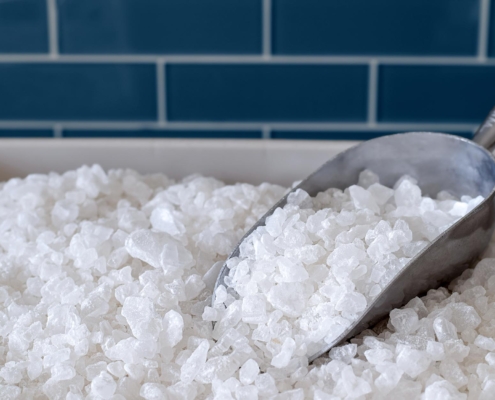
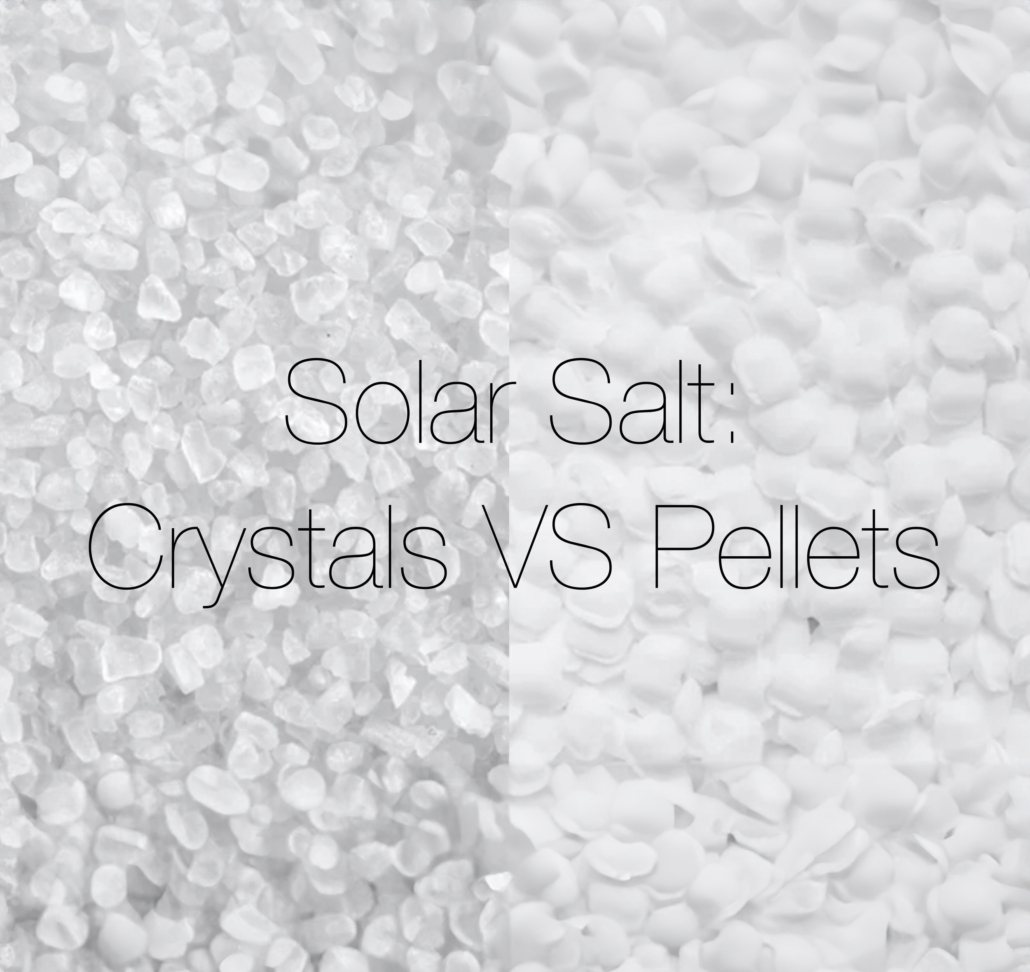
This form comes in large, irregular crystals and is primarily used in industrial applications like water softening. Crystalline salt dissolves slower than other forms, which can benefit applications requiring a steady release of sodium chloride over time.
Pellet Salt
Pellet salt is compacted into small, uniform pellets and is highly soluble. It's often used in residential water softening systems because it dissolves more evenly, which ensures efficient performance in softeners.
High-Purity Solar Salt
This is the purest form of salt and is the top choice for water-softening systems. Its minimal impurities prevent the clogging of water softener systems, ensuring efficient and long-lasting performance.
Food-Grade Salt
Although solar salt is more commonly used in industrial applications, food-grade salt is available and is used as an additive in processed foods. This type undergoes additional refinement processes to ensure it meets health standards for human consumption.
What Is Solar Salt Used For? Identifying Applications
This salt has a wide variety of applications due to its purity, availability, and cost-effectiveness. Let’s explore its most common uses:
Solar Salt Water Softener
Water softening is by far the most popular use of solar grain, especially the high-purity version. Hard water, which contains high levels of calcium and magnesium, can damage plumbing systems, reduce the effectiveness of soaps and detergents, and leave unsightly mineral deposits on surfaces. Solar material is critical in reducing these issues by effectively softening hard water.
Water softeners work by running hard water through a tank filled with resin beads that attract calcium and magnesium ions. The sodium ions from the salt brine solution is then replaced. This process makes the water "soft," extending the life of appliances and improving water quality throughout homes and businesses.
Ice Control
In cold climates, salt is used as a de-icing agent. It helps to melt ice on roadways and sidewalks, providing a safer environment during winter months. Its high solubility ensures it dissolves quickly to effectively break up ice and snow.
Industrial Processes
This salt is also used in various industries, including textiles, paper manufacturing, and chemical production. Its high purity makes it an ideal raw material for processes that require clean, contaminant-free salt.
Agricultural Applications
Farmers use this salt in animal feed, water conditioning, and crop fertilization. It provides essential minerals to livestock and helps maintain the right balance of nutrients in the soil, improving crop yields.
Food Production
Though less common than other salts, food-grade salt is used in processed foods and for seasoning. Its natural harvesting process is a bonus for consumers seeking eco-friendly, naturally produced products.
Never run out of salt at your facility and schedule timely industrial delivery with SaltCo.
Why Water Softening with High-Purity Solar Salt is Important
Now that we’ve explored the various applications of solar salt, let’s focus on one of its most critical uses: water softening. Water softeners rely on high-purity solar salt to function correctly. Here’s why it’s important to choose the right salt for this job:
Prevents System Clogs
Impurities in lower-quality salts can lead to the buildup of sludge and debris in a water softener system. High-purity solar salt contains minimal impurities, ensuring the system remains clogged-free and operates efficiently.
Enhances Efficiency
Because high-purity solar salt dissolves more evenly, it ensures that the water-softening system works at peak performance. This efficiency helps prevent hard water from damaging appliances and plumbing systems, ultimately saving homeowners money in maintenance and repairs.
Extends System Lifespan
Water softeners are an investment, and the quality of salt used in them directly impacts their lifespan. Using high-purity solar grain reduces the risk of system malfunctions, extending the life of the equipment and ensuring reliable performance over the long term.
Improves Water Quality
The primary function of a water softener is to provide better water quality, and high-purity solar salt helps achieve this goal. Soft water benefits plumbing systems and makes it easier to clean clothes, maintain spotless glassware, and avoid soap scum buildup on surfaces.
Signs Your Tanks Need to Use High-Purity Solar Salt
How do you know when it's time to switch to high-purity solar material? Here are some key signs that indicate your tanks need this efficient, clean solution.
Frequent Water Hardness Issues
If you're noticing hard water issues, such as limescale buildup on fixtures, spots on dishes, or dry skin and hair, it may be a sign that your current water softener isn't working effectively. The culprit could be low-quality salt or an insufficient purity level. High-purity salt, with its minimal impurities, dissolves more easily and prevents mineral buildup in your water softener tank.
Clogged or Inefficient Water Softener
Water softeners require salt to remove minerals like calcium and magnesium, which cause hardness. If your system isn't regenerating properly, or you’re experiencing frequent clogs, it could be due to salt buildup or undissolved particles from impure salts. High-purity salt dissolves more efficiently and leaves fewer residues.
Increased Maintenance and Repairs
Salts with high levels of impurities can lead to deposits that accumulate in the tank or pipes, leading to mechanical issues over time. Switching to high-purity solar solutions reduces the risk of these buildups, prolonging the lifespan of your equipment and lowering the frequency of maintenance needs.
Brine Tank Issues
A common issue with brine tanks is bridging or mushing, where the salt forms a hard crust or mushy layer at the bottom of the tank, preventing proper water flow and regeneration. Impurities in lower-grade salts can contribute to these problems. High-purity salt, with its cleaner composition, dissolves uniformly, minimizing the risk of brine tank issues and ensuring your water softener operates efficiently.
High-Volume Water Usage
If you manage a commercial facility or large-scale operation with high water demands, using high-purity salt is crucial. It offers better efficiency and performance in water softening systems, ensuring consistent water quality for industrial processes, laundry services, or hospitality facilities.
Receive On-Time, Jet Powered Solar Salt Water Softener Delivery From SaltCo
At SaltCo, we ensure your high-purity solar salt for water softeners arrives exactly when you need it. Our Jet Powered delivery service guarantees speed and reliability, so your operations never miss a beat, and we never even have to enter your facility! We take pride in providing timely, hassle-free deliveries that keep your tanks running at peak performance.