What Kind of Softener Salt Should I Use—and How Much? The Complete Guide
What kind of softener salt should I use? That’s the big question. A key component in keeping your water softener running smoothly is the type of salt you use. But with so many options out there, it’s easy to get overwhelmed. Should you go for solar salt or mined salt? What about salt pellets versus crystals? And how much salt should you be using anyway?
In this comprehensive guide, we’ll break down the different types of softener salt and the benefits of using solar salt in crystal form. We’ll also explain why some types of salt can do more harm than good and how choosing the right kind can save you from expensive maintenance down the line.
The Basics of Water Softener Salt
Water softeners work by removing hard minerals like calcium and magnesium from your water. This process is called ion exchange, and it requires salt to regenerate the resin that traps these minerals. The type of salt you use directly affects how efficiently your water softener works and how much upkeep it will require. If you are wondering what kind of softener salt should I use, here are a few options:
- Solar Salt: Extracted from seawater through evaporation, solar salt is more natural and purer than other types.
- Mined Salt: Taken from underground salt deposits, this type is commonly used for road treatment but is sometimes marketed for water softeners.
- Pellets: These are typically made from either solar or mined salt, compressed into pellet form.
Why Solar Salt in Crystal Form Is the Best Choice
If you're looking for the cleanest, most efficient softener salt, solar salt in crystal form is your best bet. Here's why:
Purity
Solar salt is the purest type of softener salt available. It is 99.8% pure, meaning only 4 pounds of insoluble material per ton is left behind in your softener tank. In contrast, mined salt is only 95% pure, leaving up to 100 pounds of insoluble material per ton in your tank. This difference in purity can significantly impact how often you’ll need to clean or service your softener.
Source
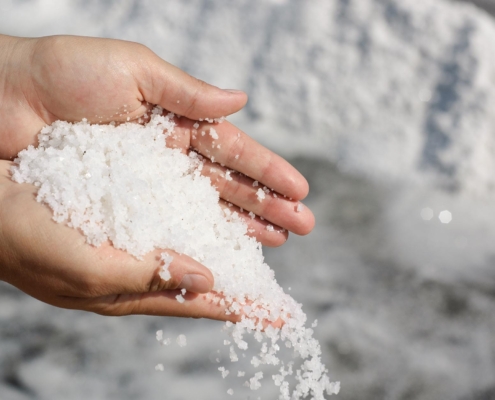
Solar salt is created through a natural evaporation process. Seawater is collected in shallow ponds and left to evaporate under the sun, leaving salt in a brine form behind. This brine is brought to the surface, and the salt is harvested. Because of this process, solar salt is less likely to contain impurities than mined salt, which can introduce unwanted materials into your water softener.
Water Softener Salt Crystals vs. Pellets
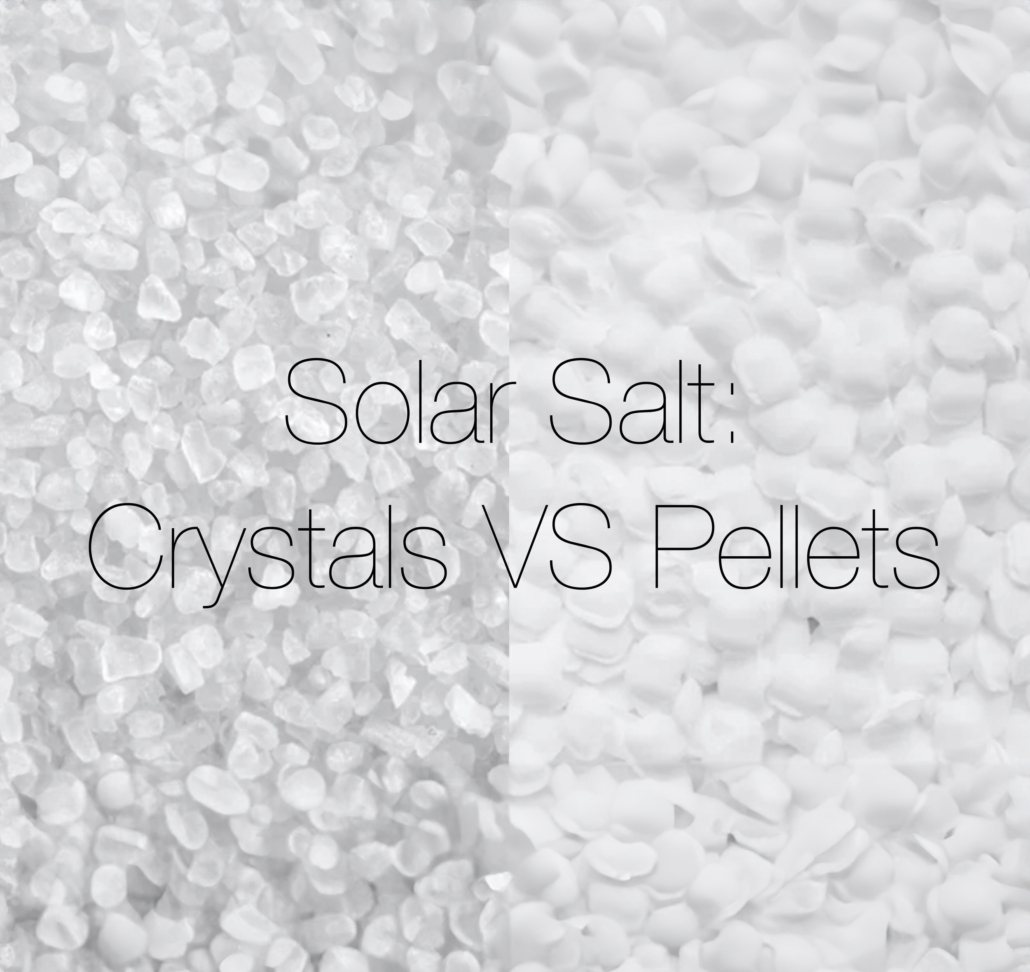
Solar salt is available in crystal and pellet forms, but SaltCo recommends using crystals for the best results. While pellets may seem more convenient due to their compact size, they are created by crushing the crystals and then binding them together with an agent. This binder can lead to residue buildup in your softener tank, causing more frequent maintenance and possible damage to your system. Crystals dissolve more easily and evenly, minimizing the risk of clogs or buildup.
Efficiency
Solar salt crystals dissolve more efficiently in water than pellets or mined salt. Because they are purer, they leave behind less residue, which means your water softener can regenerate more effectively and operate at peak performance.
Environmental Impact
The natural evaporation process used to produce solar salt is more eco-friendly than the mining process required for other types of salt. Plus, since solar salt is cleaner and purer, it reduces the need for frequent softener cleanouts, saving you time and money while reducing waste.
The Downside of Using Mined Salt
Mined salt, while widely available, is not recommended for water softeners. Here's why:
Impurities
Mined salt is only 95% pure, which means it contains more insoluble materials compared to solar salt. These impurities can clog your water softener and lead to poor performance, more frequent maintenance, and a shorter lifespan for your equipment. Over time, these insoluble materials accumulate at the bottom of the tank, creating a thick, muddy layer that can be costly to remove.
Increased Maintenance Costs
Because mined salt is less pure, it can cause a buildup of insoluble material in your softener. This means you’ll need to clean the tank more often and may face higher repair or replacement costs. On average, if you use mined salt, you could end up paying exponentially more for maintenance over time compared to using solar salt.
Promotion for Water Softeners
Despite its widespread use for de-icing roads, mined salt has been promoted as an option for water softeners. However, this marketing tactic ignores the fact that it’s less efficient and dirtier than solar salt. Choosing mined salt could lead to long-term issues with your softener, making it a less cost-effective option overall.
Are you wondering what kind of softener salt should I use? Luckily, SaltCo has you covered with the purest solar salt available, along with our industry-leading Jet Powered delivery process.
How Much Softener Salt Should You Use?
Now that you know which type of salt to use, the next question is how much you should be using. The amount of salt your softener needs depends on several factors, including the size of your water softener, the hardness of your water, and the amount of water your household uses.
A general rule of thumb is to keep your brine tank at least one-quarter full of salt. You should check the salt levels regularly, at least once a month, to make sure your softener has enough to function properly. If you notice the salt level dropping below the quarter-full mark, it's time to add more.
It’s important to avoid overfilling the tank. While it might seem like a good idea to fill the tank to the top, this can cause bridging—a phenomenon where the salt forms a crust on top, preventing it from dissolving properly. This can lead to a loss of water softener performance and may require manual intervention to fix.
Tips for Monitoring and Maintaining Your Water Softener
Along with choosing the right salt and using the correct amount, regular maintenance of your water softener is essential to ensure it runs smoothly. Here are some tips to help you keep your system in top condition:
- Check Salt Levels: As mentioned earlier, regularly check the salt levels in your brine tank and refill as needed.
- Inspect for Bridging: Salt bridging is when a hard crust forms on top of the salt in the tank, preventing it from dissolving. If you suspect bridging, gently break up the crust with a broom handle or similar tool.
- Clean the Brine Tank: Over time, insoluble materials and debris can accumulate in the bottom of the brine tank. Every 6 to 12 months, consider cleaning out your tank to prevent buildup. If you're using mined salt, you may need to clean the tank more frequently due to its higher impurity content.
- Schedule Professional Maintenance: While regular DIY maintenance can help extend the life of your water softener, it’s a good idea to schedule a professional check-up at least once a year. A professional can inspect your system, clean the resin bed, and make sure everything is running efficiently.
What Kind of Softener Salt Should I Use? SaltCo’s, Of Course!
We believe in the power of pure solar salt for its purity and unmatched efficiency. Partner with us to help you protect your softener and reduce maintenance with the cleanest, most reliable salt available at SaltCo today!